
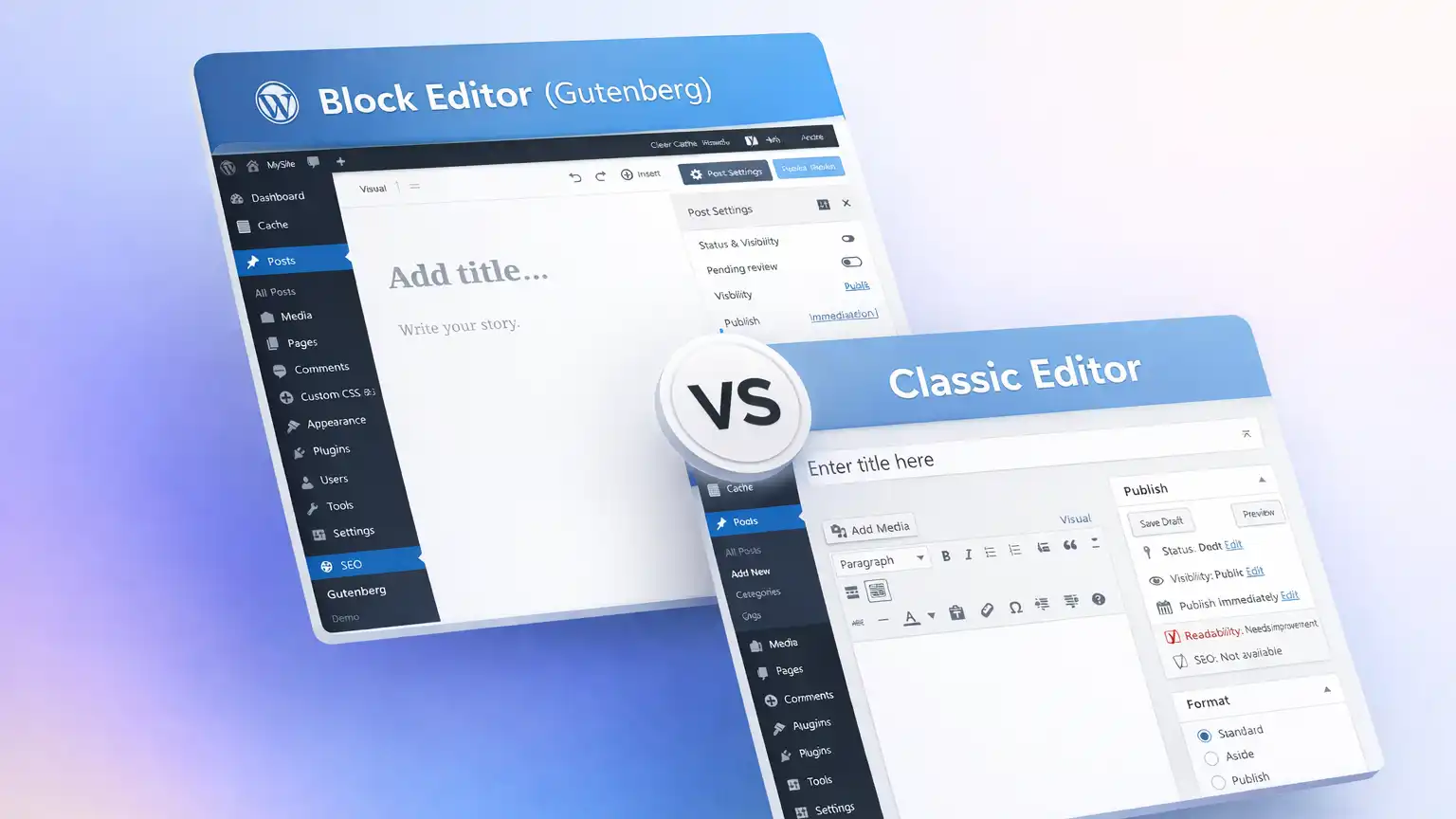
Block editors change more than how pages are written. They change how layout decisions are made, how styling is distributed across a website, and how maintenance responsibilities shift over time. For many site owners, these changes appear gradually as publishing workflows evolve rather than all at once during a platform update.
Traditional CMS editors were designed to separate content from layout. Editors such as TinyMCE allowed authors to focus on writing while templates controlled structure and presentation across the site. This separation helped maintain consistency between pages and made long-term maintenance more predictable.
Block editors introduce a different model. They allow layout decisions to be made directly inside the editing interface alongside the content itself. This flexibility can improve publishing control, but it also changes how structure develops across a website as new pages are added.
Understanding this shift helps explain why maintenance expectations sometimes change after moving from a traditional editor workflow to a block-based publishing environment. As discussed in Content-First vs Layout-First CMS Workflows, editing structure influences how templates, navigation pathways, and supporting content remain consistent across sections over time.
This article explains how block editors change website maintenance patterns, why these changes affect long-term stability, and how editing workflows influence how CMS websites evolve as they grow.
How Traditional Editors Separated Content From Layout
Traditional CMS editors were designed around a clear separation between content and layout. Editors such as TinyMCE allowed site owners to write and format text while templates controlled how pages appeared across the website. This separation helped maintain consistency between sections because layout decisions were handled outside the article itself.
In this model, the editor focused primarily on:
- Writing article content
- Adding headings and lists
- Inserting images inside the content flow
- Linking to related pages
- Structuring information for readability
Templates handled the surrounding structure of the page. Navigation placement, sidebar regions, module positions, and layout styling remained consistent because those elements were not controlled inside the article editor.
This separation helped CMS websites maintain a predictable structure as they expanded. New articles followed the same layout framework automatically without requiring authors to make design decisions during publishing.
This model also simplified maintenance workflows because structural updates could be made at the template level instead of inside each article. When navigation regions or module placements changed, those updates applied across the site without requiring changes to existing content.
For example, a traditional CMS publishing workflow typically follows a structure like this:
- Write content inside the editor
- Assign the article to a category
- Publish using the site’s template layout
- Allow modules and navigation regions to appear automatically
Because layout remained separate from content, websites using this approach often developed stable section structure across publishing cycles. As explained in Template Structure and Its Long-Term SEO Effects, consistent template-level structure helps reinforce navigation clarity and indexing interpretation across CMS websites.

This separation between content and layout formed the foundation of maintenance workflows in traditional CMS environments and helped explain why structural updates could be applied consistently across large numbers of pages.
How Block Editors Combine Content and Layout Inside the Editor
Block editors introduce a different publishing model by allowing layout decisions to be made directly inside the editing interface alongside the content itself. Instead of relying entirely on templates to control structure, authors can position elements, adjust spacing, and organize page sections while writing the article.
This approach increases flexibility during publishing, but it also changes how structure develops across the website over time. Layout choices that were previously handled at the template level can now be made inside individual pages.
Block-based editing environments typically allow authors to control:
- section-level layout structure inside articles
- column arrangements within content areas
- spacing and alignment between blocks
- placement of media elements across the page
- presentation groupings that extend beyond text formatting
| Publishing Model | Where Layout Decisions Are Made |
|---|---|
| Traditional editor workflow | Templates control layout across pages |
| Block editor workflow | Layout decisions can be made inside individual articles |
| Template-driven structure | Consistency managed centrally |
| Block-assisted structure | Consistency depends partly on publishing patterns |
These capabilities make it possible to design page structure during the writing process rather than relying entirely on templates to define layout boundaries. This can improve publishing flexibility, especially for pages that require custom presentation.
This shift does not replace templates entirely. Instead, it redistributes responsibility between templates and editors. Some structural decisions remain centralized, while others become part of the article itself.
As a result, websites using block editors often develop structure through a combination of template-level layout and editor-level layout decisions. Over time, this blended approach influences how consistently sections remain aligned across the site.

This combined content-and-layout model explains why maintenance expectations sometimes change when moving from traditional editing workflows to block-based publishing environments. Structural decisions that were once centralized now become part of everyday publishing activity.
Why Layout Decisions Inside Articles Change Maintenance Responsibility
When layout decisions move into the editor, maintenance responsibility shifts along with them. In traditional CMS publishing environments, templates handled most structural updates across the site. With block editors, some of those decisions are made inside individual pages instead of at the template level.
This change affects how structural updates are applied over time. Instead of adjusting the layout once within a template and seeing the change reflected across the site, updates may need to be reviewed within multiple articles, depending on how layout elements were used during publishing.
For example, layout decisions inside block-based publishing environments can include:
- Column-based content arrangements
- Grouped content sections inside articles
- Custom spacing between page elements
- Media placement across layout regions
- Section-level presentation variations between pages
| Maintenance Task | Traditional Editors | Block Editors |
|---|---|---|
| Layout adjustments | Usually handled in templates | May exist across multiple articles |
| Spacing changes | Template-level update | Often page-level adjustment |
| Section presentation updates | Centralized | Distributed across content |
| Structural consistency control | Template-managed | Shared between templates and editor blocks |
These layout choices improve flexibility during page creation, but they also distribute structural responsibility across the site instead of keeping it centralized inside templates.
This does not make block editors harder to maintain by default. Instead, it changes where structural consistency is managed. Site owners who understand where layout decisions are being made can plan maintenance workflows more effectively as the website grows.
This shift is closely related to the publishing models described in Content-First vs Layout-First CMS Workflows, where editing structure influences how templates and content interact across sections of a CMS website.
When layout responsibility remains clearly defined across template regions and editor-level blocks, websites can maintain consistency across publishing cycles even as block-based layouts expand across different sections.
Why Block Editors Change How Templates Are Used Over Time
Block editors do not remove the role of templates, but they do change how templates influence the structure of a CMS website. Instead of controlling nearly all layout decisions across pages, templates begin to share responsibility with editor-level layout blocks that shape how content appears inside individual articles.
This shift changes how templates function across the site. Rather than acting as the primary source of layout structure, templates increasingly provide a framework that supports page-level layout decisions made during publishing.
Over time, this can influence how templates are used in several ways:
- Templates define global navigation and section-level structure
- Editor blocks define the layout inside individual pages
- Module regions continue supporting discovery pathways
- Category views remain structural entry points into topic sections
- Section-level consistency depends on both templates and editor usage patterns
This combined responsibility model allows CMS websites to adapt more easily to different types of content. Pages that require structured presentation can be built using layout blocks, while templates continue to reinforce navigation pathways across the site.
This relationship becomes especially important on websites that publish across multiple topic clusters. Templates still define section boundaries and navigation structure, while block editors influence how content appears within those sections.
| Template Role | Traditional Editors | Block Editors |
|---|---|---|
| Primary layout control | Yes | Partial |
| Navigation structure | Yes | Yes |
| Section consistency | Template-driven | Template + editor collaboration |
| Page-level presentation | Template-defined | Editor-adjustable |
Understanding how templates and block editors work together helps site owners maintain a consistent structure across publishing cycles. As described in Template Structure and Its Long-Term SEO Effects, template-level structure continues to reinforce section clarity even as layout flexibility increases inside individual articles.
When both layers remain aligned, CMS websites can support flexible publishing workflows without losing structural consistency across the site.
How Block Editors Influence Long-Term Content Portability and Rebuild Decisions
Block editors change how easily content can be reused across templates, sections, or future platform transitions. Because layout decisions can be stored inside articles instead of remaining entirely within templates, content structure may become more closely tied to the editing environment where it was created.
In traditional CMS publishing workflows, content remained largely independent from layout structure. Articles could be moved between templates or reorganized within sections without requiring structural adjustments inside the content itself. This made long-term redesign planning more predictable because presentation layers remained separate from the writing environment.
Block-based publishing environments introduce a different relationship between content and presentation. When layout structure is created inside articles, some presentation details travel with the content rather than remaining fully centralized within templates.
This shift can influence rebuild planning in several ways:
- The content structure may depend on block layout patterns created during publishing
- Section-level presentation decisions may exist across multiple articles
- Layout adjustments may require reviewing groups of pages instead of templates alone
- Content reuse across templates may involve structural cleanup
- Future platform transitions may require layout interpretation instead of direct migration
This does not make block editors less suitable for long-term websites. Instead, it changes how rebuild decisions are approached. Site owners who understand where layout structure is defined can plan template updates and platform transitions more confidently.
This relationship between editing structure and lifecycle planning connects closely with the architectural considerations described in Content-First vs Layout-First CMS Workflows. Editing models influence how easily content adapts as websites evolve across multiple publishing stages.
When templates continue reinforcing navigation structure and section boundaries alongside block-based layout decisions, CMS websites can maintain both flexibility and long-term structural clarity as publishing patterns expand.
Why Understanding Editing Structure Helps Plan Long-Term Website Maintenance
Editing structure influences how websites evolve as they grow. Whether layout decisions remain inside templates or move partly into the editor affects how consistently sections remain aligned, how easily presentation changes can be applied across pages, and how maintenance workflows develop over time.
Traditional editors supported predictable maintenance routines because structural updates were usually applied at the template level. Block editors introduce more flexibility during publishing, but they also distribute some layout responsibility across individual articles. Understanding this difference helps site owners interpret how maintenance expectations change as publishing patterns expand.
For many CMS websites, the most important consideration is not which editor is used but where structural decisions are being made. Maintenance planning becomes easier when site owners can identify whether layout consistency depends primarily on templates, primarily on editor blocks, or on a combination of both.
This distinction helps explain why block editors sometimes feel different to maintain even when publishing workflows remain familiar. When layout structure exists partly inside articles, consistency depends more heavily on how publishing patterns develop across sections.
Understanding where layout responsibility is located also supports platform decision planning. As discussed in Why Extension Ecosystems Influence Long-Term Stability, structural decisions inside CMS platforms influence how websites evolve across multiple maintenance cycles.
When templates, navigation structure, and editor-level layout decisions remain aligned with each other, CMS websites can support flexible publishing workflows while maintaining predictable structure across long-term publishing cycles.
For a complete comparison of how platform structure affects maintenance, flexibility, and long-term workflow decisions, see WordPress vs Joomla Architecture Explained. These guides help site owners understand how CMS decisions behave over time rather than just comparing features on the surface.
Related Guides
- WordPress vs Joomla Architecture Explained
- WordPress vs Joomla and Choosing Your CMS
- Why Some WordPress Users Might Switch to Joomla
- Block Editors and Traditional Editors
- Content-First vs Layout-First CMS Workflows
- WordPress Widgets vs Joomla Modules for Creating Page Structure
- Customizing WordPress and Joomla: A Beginner’s Guide