
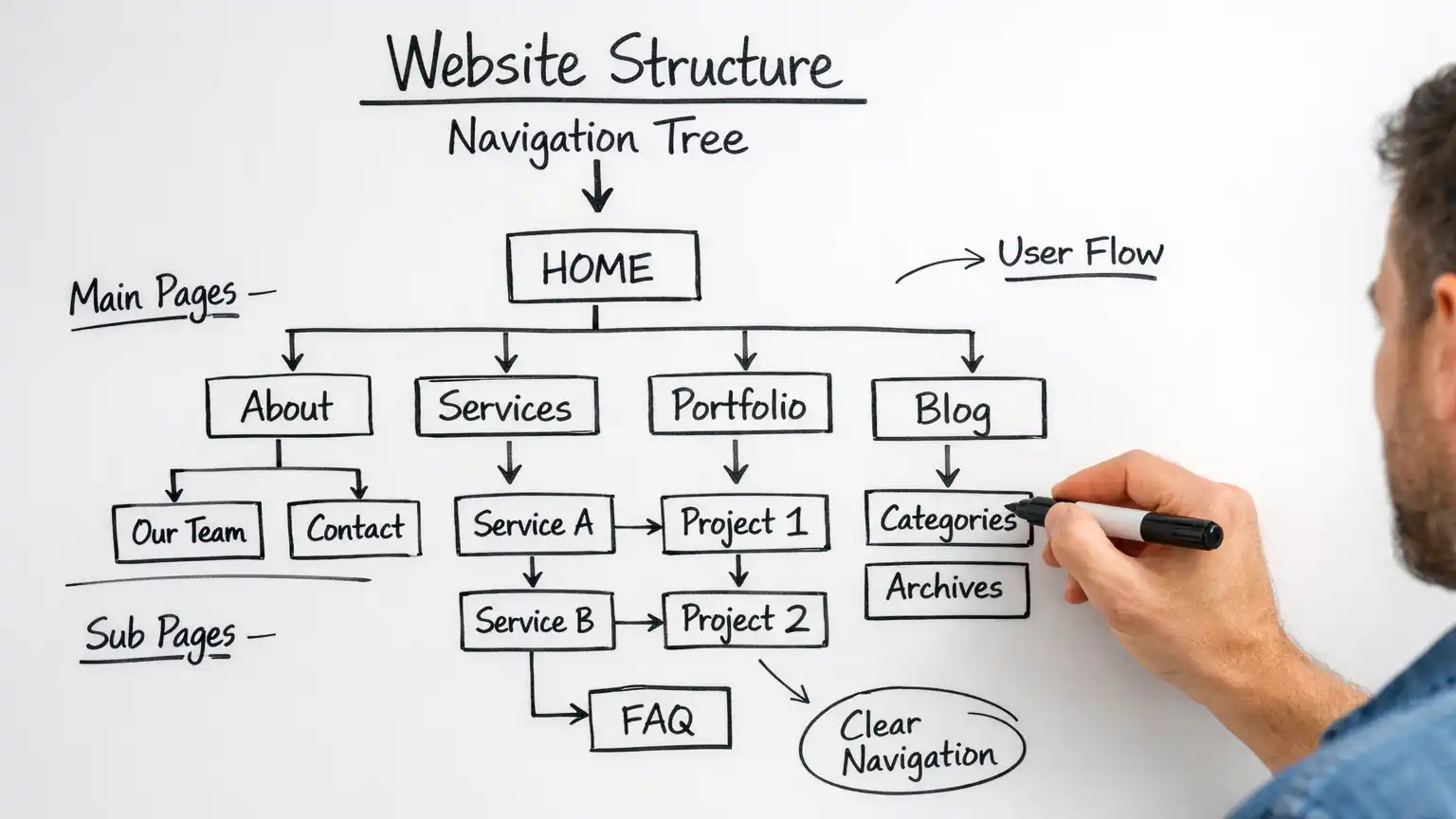
Navigation structure plays a central role in how search engines discover and interpret content across a CMS website. While internal links inside articles help connect related topics, navigation determines the primary pathways search engines follow when they first explore the site.
Menus, category pages, and section-level layouts quietly influence which pages appear important, which pages are discovered early, and which pages remain deeper inside the site’s structure. These signals shape indexing patterns over time, especially on websites that publish regularly.
Many site owners think navigation is mainly a usability decision. In practice, it also acts as a structural signal that helps search engines understand how the website is organized and how its major topic areas relate to each other.
This becomes easier to see when navigation is viewed as part of technical SEO rather than only part of design. As explained in Why Internal Linking Structure Matters More Than Plugins for SEO, search visibility depends heavily on how pages connect across the site. Navigation provides the framework that supports those connections.
This article explains how navigation structure influences indexing behavior on CMS websites and why menu design decisions affect search visibility more than many site owners expect.
Why Search Engines Use Navigation as a Primary Discovery Map
When search engines first explore a website, they rely heavily on navigation to understand how the site is organized. Menus provide a structured overview of the site’s main sections and signal which topic areas the site considers most important. These signals influence how crawlers move through the website during early indexing passes.
Primary navigation typically appears on every page of a CMS website. Because of this consistency, links inside navigation menus carry strong structural meaning. They help search engines identify which sections form the foundation of the site’s topic coverage.
This differs from contextual links inside articles, which connect related explanations across the site. Navigation establishes the framework. Contextual linking strengthens relationships within that framework.
CMS platforms automatically generate many navigation pathways through menu systems, category structures, and template layouts. These layers guide how search engines move from section-level pages into supporting content areas. When these pathways reflect a clear topic hierarchy, indexing coverage becomes more predictable across the site.
This is one reason navigation works together with internal linking rather than replacing it. As explained in Why Internal Linking Structure Matters More Than Plugins for SEO, contextual linking strengthens topic relationships after discovery begins, while navigation helps search engines determine where discovery starts.
When navigation consistently reflects the site’s main topic structure, search engines gain a clearer understanding of which sections represent central areas of expertise and which pages provide supporting explanations within those sections.
How Menu Hierarchy Influences Indexing Priority Across a Site
Search engines interpret menu hierarchy as a signal of structural importance. Pages that appear closer to the top level of navigation are typically discovered earlier and revisited more frequently. This does not guarantee higher rankings, but it does influence how consistently those pages remain visible within the indexing process.
Top-level menu items usually represent the primary subject areas of a website. Second-level menu items introduce supporting sections inside those areas. Deeper navigation layers provide additional structure, but they often receive less consistent crawl attention if they are not reinforced through contextual linking.
This creates a natural indexing pattern across CMS websites where visibility begins with top-level sections and expands outward into supporting content.
| Navigation Layer | Typical Indexing Influence |
|---|---|
| Top-level menu items | Signal primary topic coverage areas |
| Second-level menu items | Define supporting sections within major topics |
| Third-level navigation layers | Organize deeper structural groupings |
| Content reached only through archives | Often receives less consistent crawl attention |
CMS templates reinforce these layers automatically because menu structures appear across multiple pages throughout the site. As a result, navigation hierarchy becomes part of the site’s architectural signal rather than just a design choice.
This is especially important on websites that publish regularly. As new articles are added, menus help search engines interpret how those articles fit within the broader topic structure. When navigation layers reflect logical subject groupings, indexing coverage expands more evenly across the site.
However, menu hierarchy alone cannot maintain strong indexing coverage across deeper content areas. Contextual linking inside articles still plays a central role in reinforcing those connections, especially as the site grows. This relationship between menus and contextual links is explained further in Why Internal Linking Structure Matters More Than Plugins for SEO, where internal linking supports topic relationships beyond navigation layers.
Why Category Pages Help Search Engines Interpret Topic Sections
Category pages play an important role in helping search engines interpret how articles are grouped within a CMS website. While menus establish the primary structure of the site, category pages organize supporting content inside each section and help define the boundaries of topic areas.
When category pages consistently group related articles together, they act as structural reference points that help search engines understand what each section of the site represents. This improves how clearly the site presents its subject coverage across multiple related articles rather than relying on individual pages to define topics independently.
CMS platforms automatically generate category pages as part of their publishing workflow. These pages update as new articles are added, which allows the site’s structure to expand without requiring manual navigation changes each time new content is published.
This automatic grouping makes category pages especially useful for maintaining structural clarity as a website grows. They provide search engines with predictable entry points into supporting content areas and help reinforce which articles belong inside each topic section.
Category structure works most effectively when it aligns with the site’s broader topic architecture. For example, grouping stability-focused articles such as Early Warning Signs a Website Is Becoming Fragile within a clearly defined section helps search engines interpret how those articles relate to each other as part of a shared subject area.
When category organization reflects intentional topic groupings instead of convenience-based publishing patterns, search engines gain stronger signals about how the site’s sections connect to its overall subject coverage.
Why Navigation Depth Affects Crawl Reach Across CMS Websites
Navigation depth influences how easily search engines reach content across a website. Pages that sit closer to the homepage within the navigation structure are typically discovered earlier and revisited more consistently. Pages located deeper in the structure may still be indexed, but they often depend more heavily on internal linking support to remain visible within crawl pathways.
This does not mean deeper content is less valuable. Instead, it reflects how search engines prioritize exploration across large numbers of pages. Navigation depth helps indicate which sections form the structural foundation of the site and which sections serve as supporting layers within that foundation.
CMS websites naturally develop deeper navigation layers as they grow. New articles accumulate inside category sections, archive pages expand, and supporting explanations extend topic coverage across multiple levels of structure. Without reinforcement through contextual linking, some of these deeper pages can become harder for search engines to revisit consistently.
| Navigation Depth Level | Typical Crawl Impact |
|---|---|
| Homepage-linked sections | Discovered quickly and revisited frequently |
| Category-linked articles | Reached through section-level pathways |
| Archive-only access paths | Less predictable crawl access over time |
| Contextually reinforced deep articles | Maintain stronger crawl visibility across publishing cycles |
This is why navigation depth works together with internal linking rather than replacing it. Contextual linking helps strengthen crawl access to deeper content by reconnecting supporting articles to central topic pathways. As described in Why Internal Linking Structure Matters More Than Plugins for SEO, contextual linking helps maintain structural connections even as publishing layers expand.
When navigation depth remains aligned with topic structure instead of expanding unpredictably, search engines gain a clearer understanding of how supporting content fits within the site’s overall organization.
Why Menu Design Signals Section-Level Importance to Search Engines
Menu design helps search engines interpret which sections of a website represent its primary areas of focus. Because menus appear consistently across pages, they provide strong signals about how the site organizes its major subject areas and which sections form the foundation of its structure.
When a section appears in primary navigation, search engines are more likely to interpret it as a central part of the site’s topic coverage. Supporting sections that appear deeper within navigation layers still contribute to structure, but they typically carry different structural weight within the overall site framework.
This makes menu planning an architectural decision rather than only a usability decision. The placement of sections within navigation helps search engines understand how the site defines its subject priorities.
CMS platforms simplify menu creation, but they do not automatically determine which sections should appear at the top level. That decision depends on how the site defines its major topic areas. When navigation reflects those areas clearly, search engines can interpret the structure more confidently.
This becomes especially useful when topic sections align with the site’s authority clusters. For example, organizing navigation around areas such as website stability, technical SEO, performance interpretation, and CMS architecture helps reinforce how the site explains long-term website lifecycle decisions.
As discussed in Why Internal Linking Structure Matters More Than Plugins for SEO, navigation works most effectively when it supports the broader internal linking structure instead of operating separately from it. Together, these layers help search engines interpret how the site’s sections connect across its topic coverage.
Why Consistent Navigation Structure Improves Indexing Stability Over Time
Search engines revisit websites repeatedly to confirm how their structure evolves as new content is published. When navigation remains consistent across publishing cycles, it provides a stable framework that helps search engines continue interpreting the site’s topic organization without needing to reassess its structure from scratch.
Frequent navigation changes can make it harder for search engines to maintain a clear understanding of how sections relate to each other. This does not prevent indexing, but it can slow how efficiently structure is interpreted, especially on CMS websites that publish regularly over long periods of time.
Consistent navigation helps reinforce which sections represent the foundation of the site’s subject coverage and which articles belong within those sections. This stability improves how reliably search engines revisit important topic areas as the site grows.
| Navigation Pattern | Indexing Effect Over Time |
|---|---|
| Stable section-level navigation | Search engines maintain a clearer understanding of the topic structure |
| Frequent menu restructuring | Structural interpretation requires repeated reassessment |
| Consistent category alignment | Topic groupings remain easier to interpret |
| Navigation aligned with cluster structure | Section-level authority signals remain stronger |
This is especially important for CMS websites that develop topic clusters over time. As new supporting articles are added, stable navigation helps search engines recognize how those additions extend existing sections rather than creating entirely new structural pathways.
Navigation stability also works together with category organization and internal linking structure to maintain predictable indexing coverage. For example, grouping related articles, such as Why Duplicate Content Happens Inside CMS Platforms within a consistent section helps reinforce how those explanations support a shared topic area.
When navigation structure remains aligned with the site’s topic architecture instead of changing frequently in response to short-term publishing patterns, indexing coverage becomes more stable across both newer and older content.
Why Navigation Structure Works Together With Internal Linking to Shape Indexing Behavior
The navigation structure helps search engines understand the major sections of a website. Internal linking helps them understand how individual articles connect within those sections. Together, these two systems shape how indexing coverage develops across a CMS website over time.
Navigation establishes predictable entry points into topic areas. Internal links extend those entry points deeper into supporting explanations. When both layers reinforce each other, search engines can move through the site more efficiently and interpret how its subject coverage is organized.
This combined structure becomes especially important as a website grows beyond a small number of pages. Without contextual linking support, deeper articles often depend entirely on category listings or archive views for discovery. With contextual linking support, those articles remain integrated into active topic pathways across the site.
This relationship between menus and contextual linking is explained further in Why Internal Linking Structure Matters More Than Plugins for SEO, where internal linking strengthens topic relationships that navigation alone cannot fully define.
When navigation and internal linking reflect the same topic structure instead of operating independently, search engines gain a clearer understanding of how the site organizes its subject coverage. This improves indexing consistency across publishing cycles and helps support articles remain connected to their broader topic sections as the site expands.
Over time, this type of coordinated structure helps CMS websites maintain predictable indexing patterns instead of relying on menus alone to support discovery across deeper layers of content.
For a broader explanation of how website structure affects crawlability, indexing, and long-term visibility, see Technical SEO Foundations for CMS Websites. These guides focus on the structural side of SEO rather than keyword tactics or short-term optimization tips.